Sisters but not twins, photographer and artist duo Anna and Maria Ritsch have managed to find their stride in the worlds of fine art, publishing, personal work and commissions, operating between Vienna, Paris and New York. On a rainy day in NYC, we sat down to hear how it all started and how they make it happen, both together and apart.
ÉDITIONS: Who are the Ritsch Sisters?
ANNA RITSCH: You want me to start Maria?
MARIA RITSCH: Yes. You start.
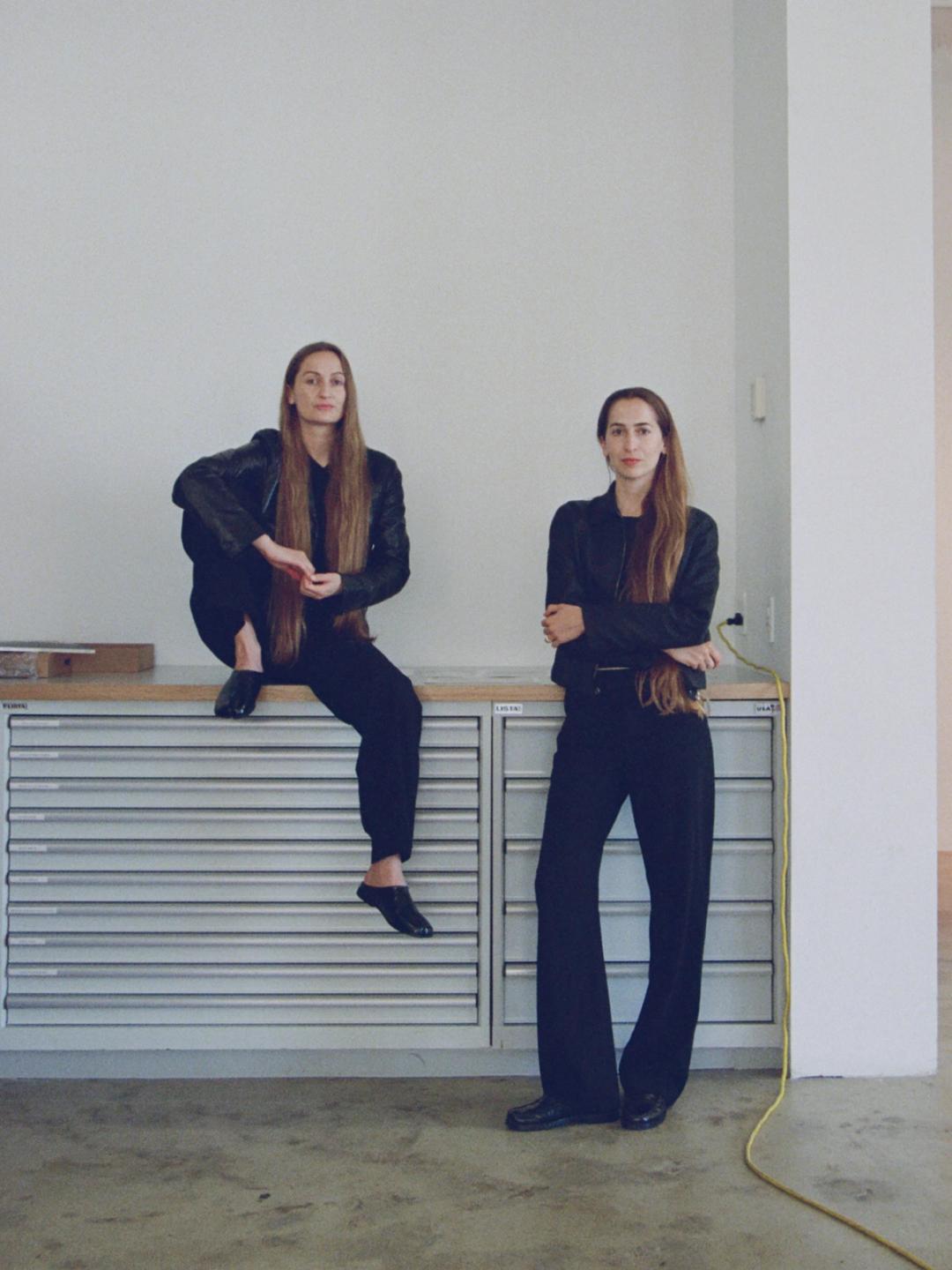
AR: We’re sisters and grew up in Vorarlberg, in Austria, very close to the Swiss border. It’s quite a particular region, and the dialect is very different from the rest of Austria. We started collaborating as Ritsch Sisters in early 2020, working across photography, installation, video and sound. Our work looks at relationships, perception, and what happens between people. Now we’re based between New York, Paris, and Vienna.
É: So what was happening before 2020? You were already sisters for your entire lives, but what were you doing before you became this version of the Ritsch Sisters?
AR: We were both working individually in art. We each had our own practice and were doing different things.
MR: Well, after we finished high school, we both went to Vienna to study. Anna studied photography, and I studied art and communication.
AR: And then I moved to New York in 2009.
MR: I was still studying at the time, and even though we were not in the same place we always had this ongoing dialogue. We were constantly exchanging ideas and talking about each other’s work. We were very close, even though we weren’t living in the same place anymore.
AR: We always collaborated on smaller projects when we were in the same place. And a lot of the time it was photography, and then printed matter, or design. I think we both realized that we enjoy working in dialogue with someone else. So eventually it became very natural to work together more seriously.
MR: I think it was also important that we both had these periods of living and working independently, with Anna in New York and me in Vienna. It was necessary for our development to do different things and experiment with different ideas, and then later bring all of that together and create something new.
É: Which one is older and which one's younger?
AR: I’m older and Maria is four years younger than me.
É: Did you both go to the same school?
AR: No.
É: Did you go to school for the same thing?
AR: Not really.
MR: Anna specialized in photography, and I went to art school. So for me, it was more like I could choose to focus on whatever I was interested in. I chose photography and graphic design as my main areas, but I also had all kinds of classes, like painting, textiles, performance, printing and design. For me, it was more like a playground.
Oh, and Anna always gave me her old camera gear.
É: That's nice. Hand-me-downs.
É: Was your university also in Austria or were they somewhere else in Europe?
AR: They were both in Vienna. We grew up in the west of Austria, but we both went to Vienna to study because, back then, that was kind of where you went. You went to the big city.
I came to New York after that for an internship at a photographer’s studio. My thing was more photography-based, but I think for us, photography was always the first visual medium that we really connected through. It was a way to translate ideas between us. Somehow, it was easier with a camera than with words.
É: Can you say more about the dialect you speak?
AR: It’s Austrian, but it’s more like Swiss German, but also not really Swiss German.
MR: It’s a very particular dialect from the region we grew up in. Even within Austria, people often don’t understand it.
É: So you’re really far west.
AR: Yes, very far west. It’s right in the Alps, close to Switzerland and Germany. It’s a pretty small and specific region, and I think growing up there definitely shaped us in certain ways. It’s a very different environment from Vienna or New York.
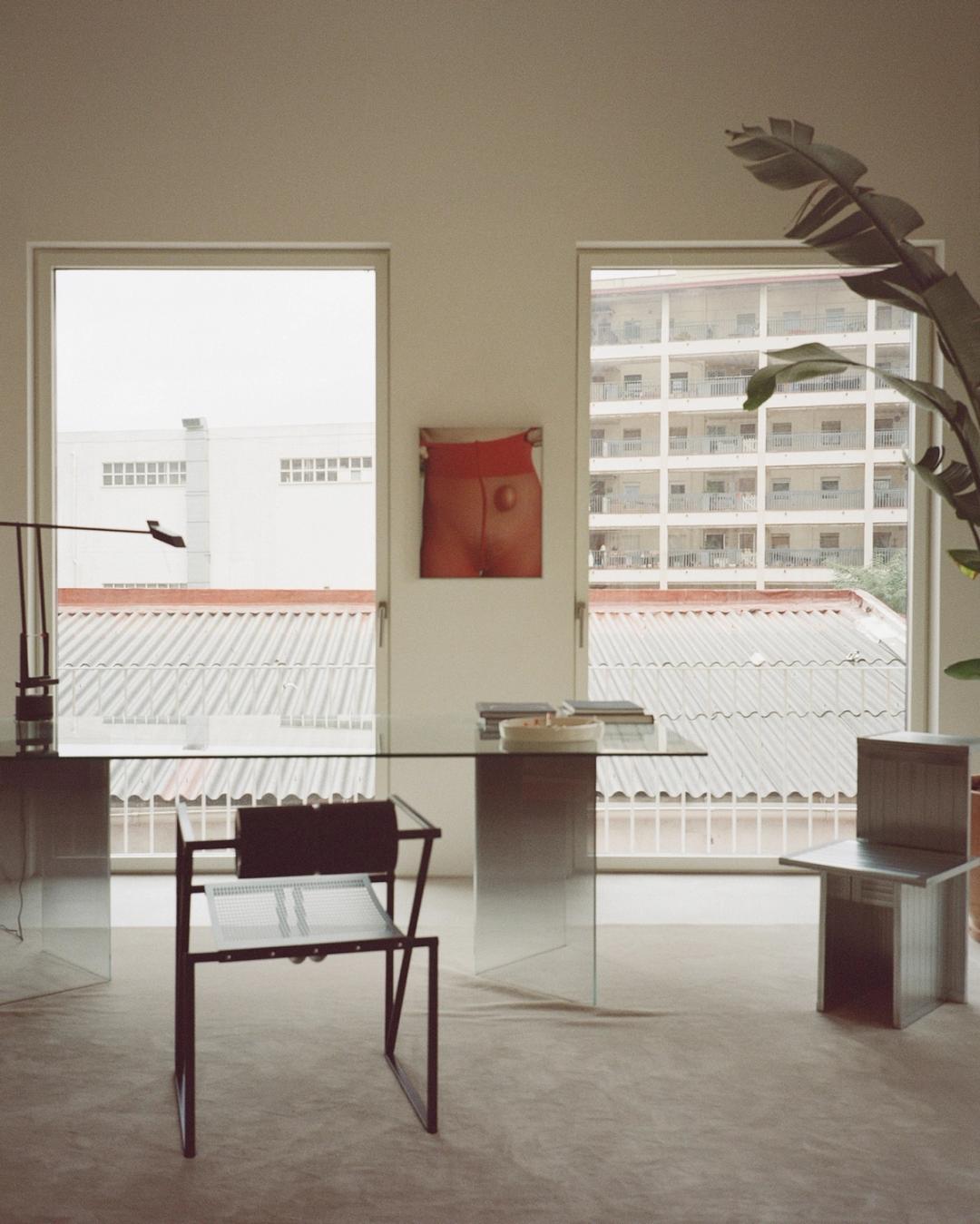
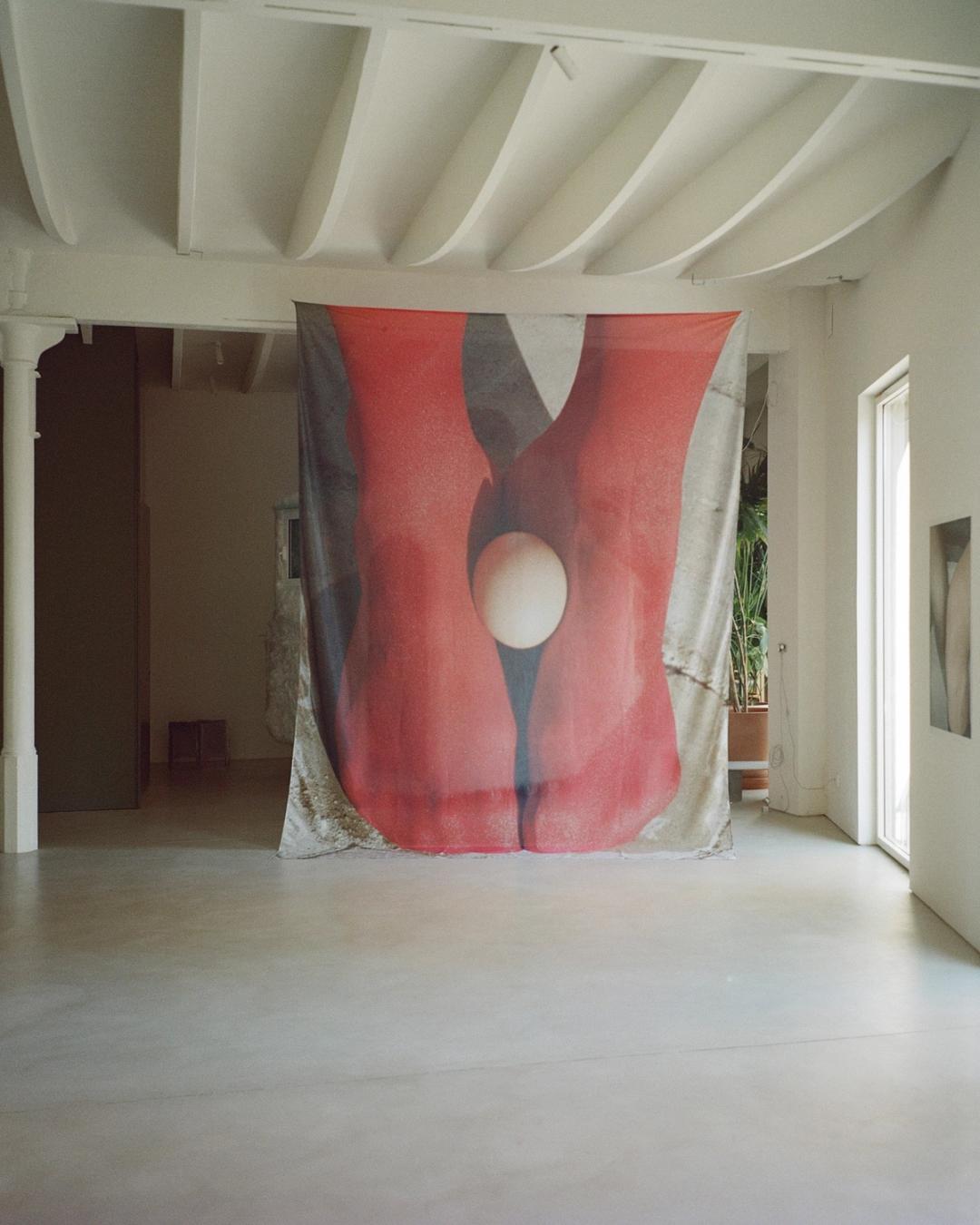
É: There's definitely something to that, the fact that you had to find a way even within your own country to communicate things that weren't in your native dialect. Fast-forwarding to the present day, I wanted to zoom in on your residency at Villa Clea, which now was all the way back in 2024. The exhibition actually just ran and closed in 2026?
AR: That was a little confusing because there was an exhibition that included our work, but it brought together works by everyone who had done a residency there.
É: So funny. So they just shared the images now?
AR: Yes, they just put on an exhibition featuring all of the residencies they had.
MR: And we just shared the images of the making because we felt it was a good moment to show the work again.
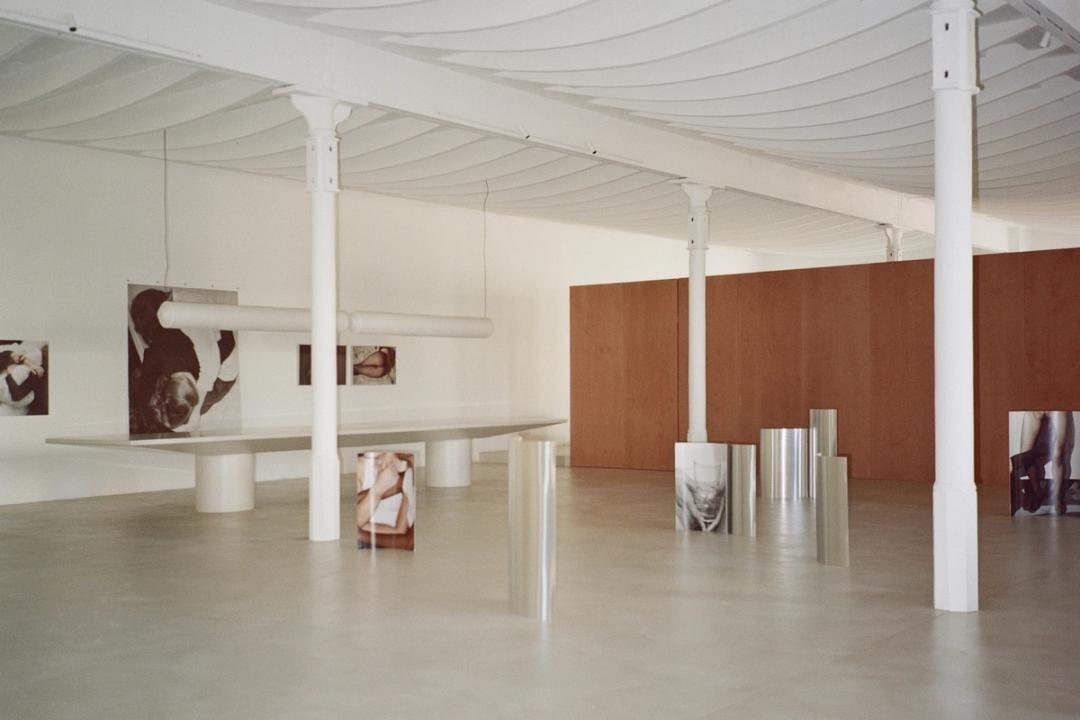
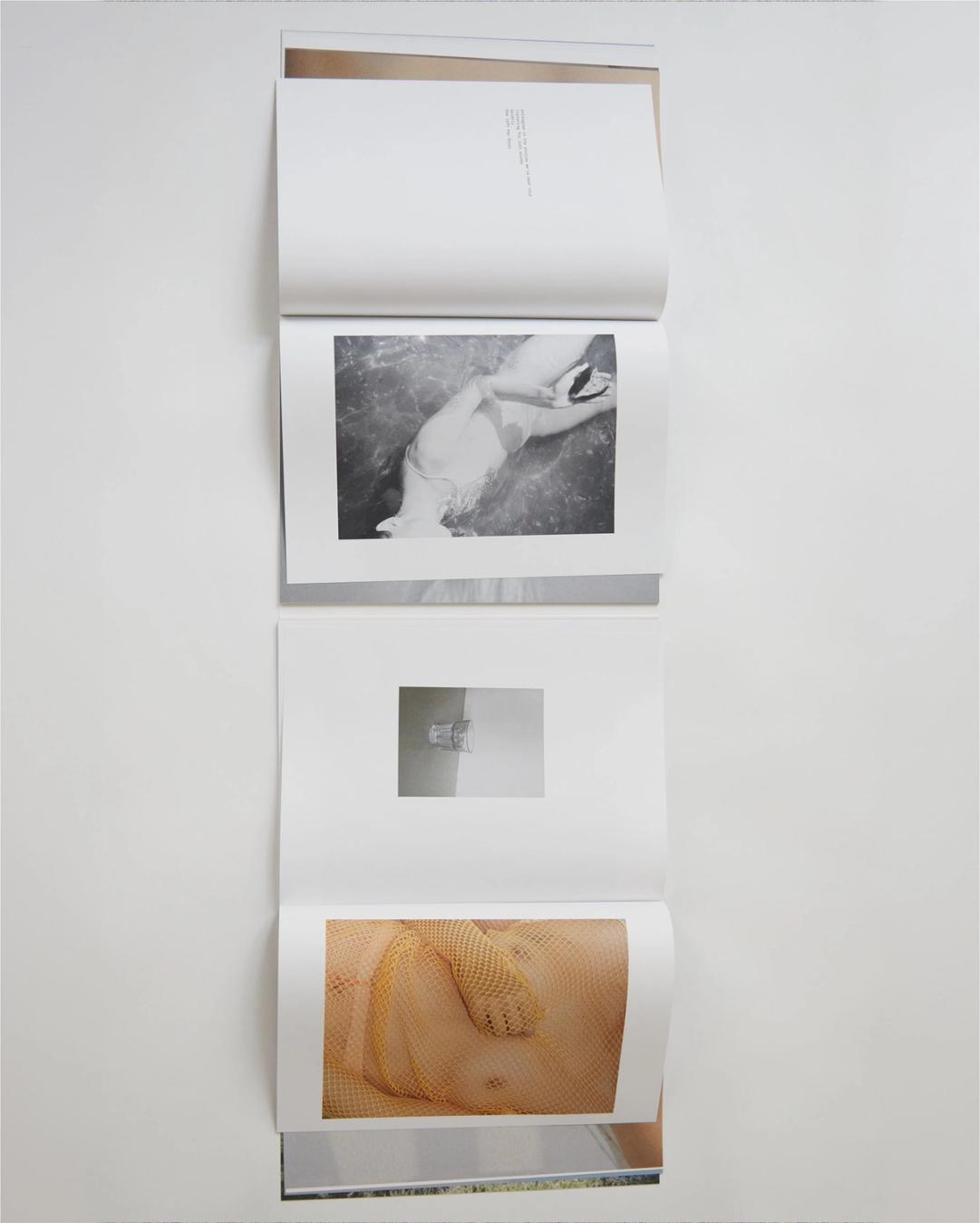
É: That's interesting, the fact that you're still talking about this work now, some artists don't do that. But I wanted to know more about this very same idea in your body of work Together Apart, of taking place across time. It was something you were first exploring abstractly, but then it took shape as a book and later as an exhibition.
What has it been like to take that set of ideas that lives within Together Apart over the last five or six years into these different iterations?
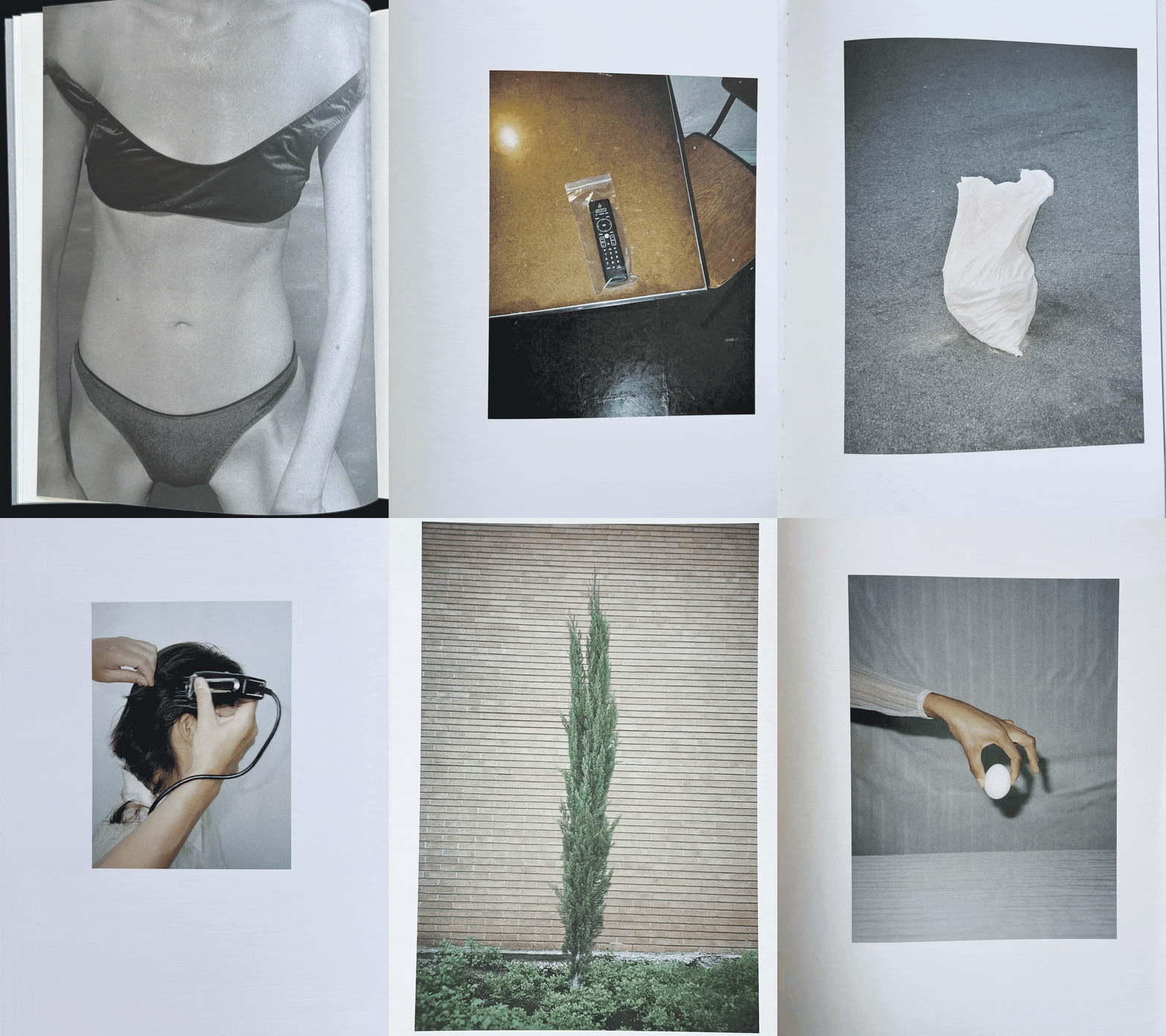
AR: I think Together Apart was really how our collaboration started. It became a kind of methodology for our practice: working together while living in different places. But it’s also about the dynamic between two people more generally. You remain an individual, but something changes when you come together with another person.
Together Apart was a way for us to move away from individual authorship and really enter this collaborative space. Over time, it became less about who made what and more about a shared vision. That eventually took shape in our first solo exhibition as a duo in Austria, which was also called Together Apart. So the ideas behind Together Apart have really continued to run through our work.
MR: With Together Apart, we also started to find a way to add a title to every image. We wanted to introduce this additional layer of text, and it became really interesting and necessary.
Every photograph has a title, and the idea is that all of these titles can eventually form a poem or a text. They can also shift depending on how the images are combined or how you move through the book. The meaning can change depending on how you read it.
É: So you're really dissolving authorship and allowing for free readership as well.
AR: Yes. We love playing with layers, and we’re really interested in ‘why do we see what we see’.
You have an image and a title, and whoever is looking at it will have their own associations, shaped by their own experience and awareness.
It was important for us not to explain the idea, but to let the relationship between image and title become something more like an abstract poem or narrative. There isn’t one fixed way of reading it.
We also started reflecting on why we photograph in a certain way. Sometimes we’ll take a photograph and only later ask ourselves, ‘Why did we take this? What does it even mean?’ That process of going back and analyzing our own images is also a form of self-exploration for us.
É: Sounds like ultimate outcome of the partnership is the ability to do things that you couldn't do individually. Not mine or yours, but ours. When it comes to actually making the work, what's that like? What's the, the process? How do your individual POVs kind of differ and how are they similar? How do they come together in a tactical or practical sense?
AR: It’s a lot of talking and a lot of communicating. But our points of view are actually very aligned. In the process, we can be quite different and have very different personalities. Maria can be more open, throwing in all kinds of ideas, and I’m sometimes more like, ‘Okay, but what is actually…”
MR: …like ‘how do we organize this?’
AR: Exactly. Like, which direction do we actually want to explore further? So sometimes we have quite different perspectives during the process, but when it comes to the final result, we’re usually very aligned.
I think it’s important that we both bring our own perspective and personality into the process. But when we come together, something emerges that neither of us would have arrived at in exactly the same way on our own.
É: Kind of a 1+1=3 thing?
AR: Yes, kind of like that. É: Do you feel like that's part of your impetus for working together, to show that greater-than-the-sum-of-its-parts effect?
MR: I think it’s more of an underlying feeling than something we’re consciously trying to show. For us, working together means constantly negotiating between our individual perspectives and the collective.
I think that’s also what makes the collaboration interesting for us. It’s not about one person being right or having the stronger voice. It’s about finding what serves the work as a whole.
É: I think that's a good segue to my questions around commercial work. As artists today, especially photographers, we have this dual identity where we think of ourselves as creators, but we also have to play to the king's court to make money and pay for everything. I know that you both work commercially, and often together — what does it actually mean for a commercial client to hire you as a duo?
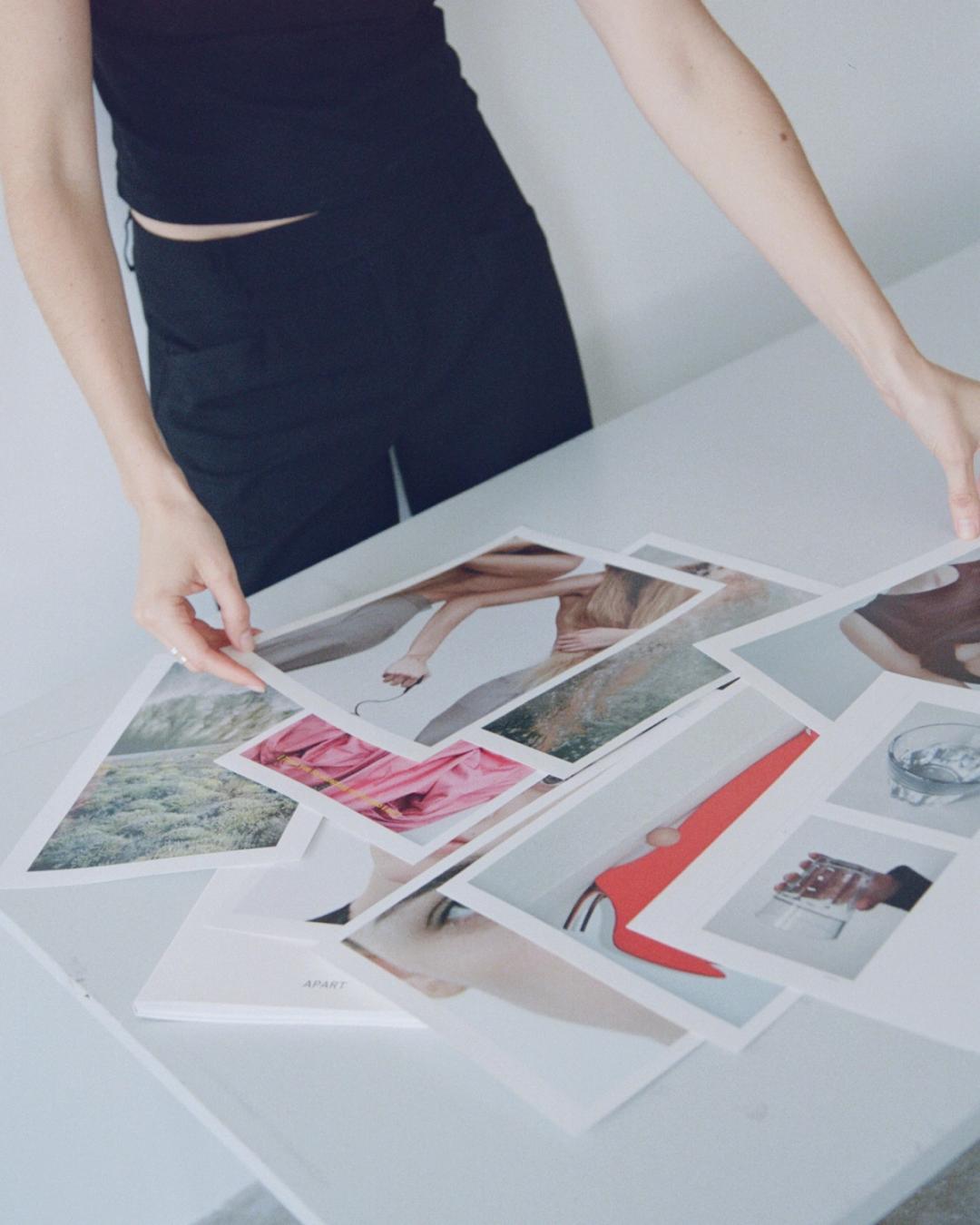
AR: I think the past couple of years we were very much in a go, go, go mode. We were doing exhibitions, books, commissions, and all kinds of projects, and a lot happened in a relatively short period of time. More recently, we've been thinking about how we want to work going forward, and how we want all these different parts of our practice to relate to each other. For us, it's becoming less about separating the artistic and the commercial work, and more about understanding what we can bring from one into the other. Our artistic practice has given us a very particular way of looking at people, spaces, objects, and relationships, and that's naturally going to be present whenever we make an image.
Working in fashion, editorial, or cultural contexts really does connect back to our artistic practice, mainly because we’re interested in people, culture, and how we live together.
MR: And I think we've become more aware of how much authorship we can actually bring into a commissioned context. Of course, there are parameters in commercial work. There is a client, a product, a message, a certain audience. But within those parameters, there is still a lot of room to bring our own way of seeing.
For us, it's about finding that space rather than thinking that we have to become a different version of ourselves depending on the context.
É: Right.
AR: It also really depends on the client and the project, and on what the starting point is. We always discuss ideas together, and we always try to create something special within the context. I think the more we understand what is specific about the way we see and work together, the more confidently we can bring that into a commission.
È: It feels like having this capital-A Artistic practice lends some gravity to your work as commercial makers. Do you find that that's like a good selling point for clients, the idea that they can kind of dip into that world of artistry and concepts, as opposed to just getting studio images from someone?
MR: I think for some clients it’s definitely part of why they come to us. But whether they're consciously looking for the art practice or not, it's always going to be part of how we see and make images.
AR: Sometimes something comes up through a commercial project that we realize we want to explore more freely in our art, and sometimes something from the art practice finds its way into the commercial work. So there's this constant exchange between the two.
MR: And I think it’s also about the mindset we bring into the work. Commissioned work is part of our life and it supports our practice, but we also want to approach it with curiosity and with the feeling that we have something to contribute.
AR: Exactly. For us, it's becoming less about asking which side we belong to, and more about allowing the two practices to inform each other. They can exist within the same life, and they can both be part of the same way of seeing.
MR: Yes, I think the two sides can nourish each other.
È: It really feels like we’re living on the other side of the collapse between these poles, and as you know, everyone's an image maker now and every commercial entity on earth is trying to sell things with images. And so you have normal people using images to sell things on behalf of these companies. It’s all happening in one arena, it's been really interesting to see which people are kind of rising from the ash heap of that and, and pushing what a commercial image could be. Some things that you see right now are so far away from what commercial imagery was 10 years ago or even five years ago. Feels like more and more images are loaded with meaning and as much as they have a role to play for a brand or whatever. On a completely different tip, what’s next for you on either side of the collapse?
AR: We have a group show coming up in Barcelona, opening October 15th, called Prototype at VASTO Gallery. We’re showing a completely new choreographed, sound-based installation, alongside a seating object we created in collaboration with the design duo Forever Studio. Then, in the second week of November, we’ll be part of a group show with VASTO Gallery in New York. We’re still working on the details for that one, but we’re excited to bring some new work to New York.
MR: We’re also thinking more spatially at the moment. Not necessarily about moving away from images, but about expanding what the work can be and how it can be experienced. With installation and objects, the work exists physically in a space, and that changes the relationship between the work and viewer. The viewer isn’t only looking anymore; their presence can actually become part of the work.
AR: The seating object we made with Forever Studio started from a conceptual idea, but it also became something functional. We really like that it can exist somewhere between furniture, sculpture and installation, without having to belong entirely to one category.
The performance of the work, and the way people interact with it, can become part of the piece itself. We’re interested in creating situations where the work can change depending on what happens between the piece, the space and the person experiencing it.
MR: So I think we’re expanding the language a little bit. An image, an object, a sound, a body, a space—they can all become part of the same work. We’re interested in what happens when those things start to inform each other.
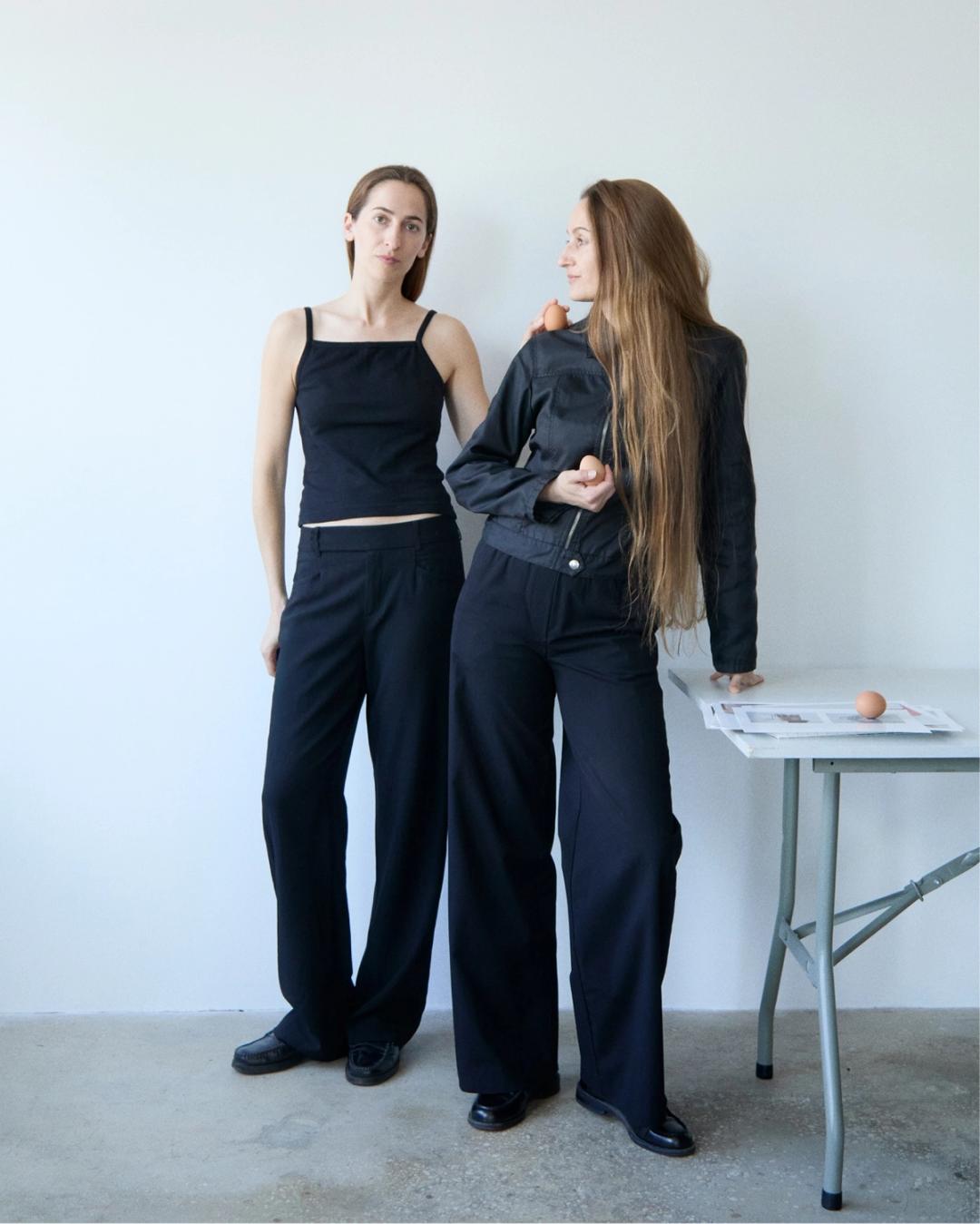
É: I'm sure people ask you this all the time, but can you tell us about the hair? And you're like, you have kind of like almost a twin like appearance, but I know you're not twins, but did you decide to both grow your hair forever?
AR: I mean, it happened during COVID.
MR: It was also a coincidence. When we decided to start working together in 2020, before COVID, our hair was already almost the same length. Then COVID happened, we stopped cutting it, and it just kept growing.
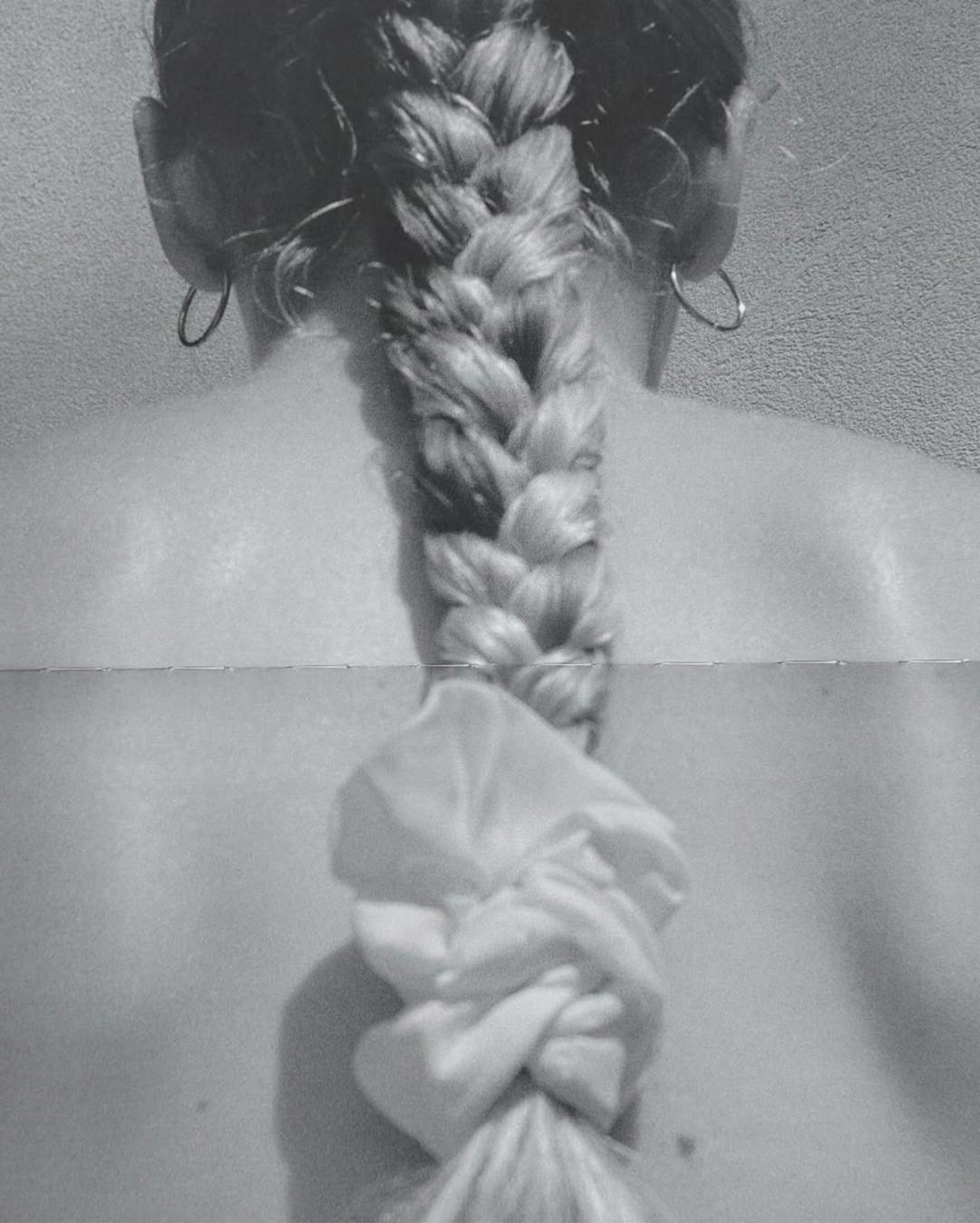
When we had our first solo show as a duo, we didn’t really want to keep showing ourselves directly alongside the work. So we used a photograph of us from behind, where you mainly see our hair. And somehow that image became a kind of signature for us, even though we never consciously intended it to.
Now we’ve reached a point where cutting it would feel like a very big thing [laughs]. I think if we ever cut it, we’d probably have to make a performance out of it, because it would be such an intense experience. I would definitely cry.
AR: I think there are also a lot of things attached to hair, especially long hair. We’ve talked about it in relation to our work because it’s so connected to traditional ideas of femininity. And I think there’s something interesting about embracing that femininity, especially within a world that can often feel very masculine.
MR: For me, it also feels like a kind of protection.
AR: You can hide behind it a little bit.
MR: You can hide behind it, but it can also become quite sculptural. It has a presence of its own. Sometimes it even gives you a certain kind of power.
AR: And there’s an interesting contrast with the shaved head. Long hair can feel like something you carry with you, something that can conceal or protect you, while a shaved head is almost the opposite — there’s nothing to hide behind.
MR: So I think the hair has become part of our image, but it also has a life beyond the image. We’ve had it for so long now that it’s become part of how we see ourselves, too.
The Ritsch Sisters new works can be seen in ‘Prototype’, the upcoming group show at Vasto Gallery in Barcelona. Follow @ritsch.sisters for details on their next stateside appearance in New York, also with Vasto.